


Outdoor spaces fail for a simple reason: they look finished, but they do not work hard enough. A yard can be attractive and still be awkward to use, difficult to move through, or unusable for much of the year. In Utah landscaping, functionality matters as much as beauty because climate, grade changes, and seasonal swings shape how a property actually performs.
The strongest landscapes do more than decorate a home. They create usable square footage, improve circulation, support gathering, and solve problems that would otherwise limit how the space can be enjoyed. That is why thoughtful design-build firms like Cottonwood Landscapes focus on features that change how a property functions, not just how it photographs.
Why Functional Landscaping Outperforms Purely Decorative Design
A landscape that only looks good from the window often becomes underused space. People avoid areas that feel exposed, too hot, too dark, too steep, or too exposed to weather. Once that happens, the yard stops contributing to daily life and starts acting like a maintenance burden.
Functional features solve that problem by answering one of three questions: how do people move here, how do they gather here, and how long can they use the space throughout the year? When those questions are addressed early, the result is a landscape that feels intentional and livable.
For Utah properties, this matters even more. Semi-arid conditions, freeze-thaw cycles, high-altitude planting challenges, and sloped lots all influence design decisions. Cottonwood Landscapes brings over 35 years of regional experience to those variables, which is especially important when the goal is to make the outdoor space perform well over time instead of simply looking complete on day one.
The Best Designs Start with Usability, Not Ornament
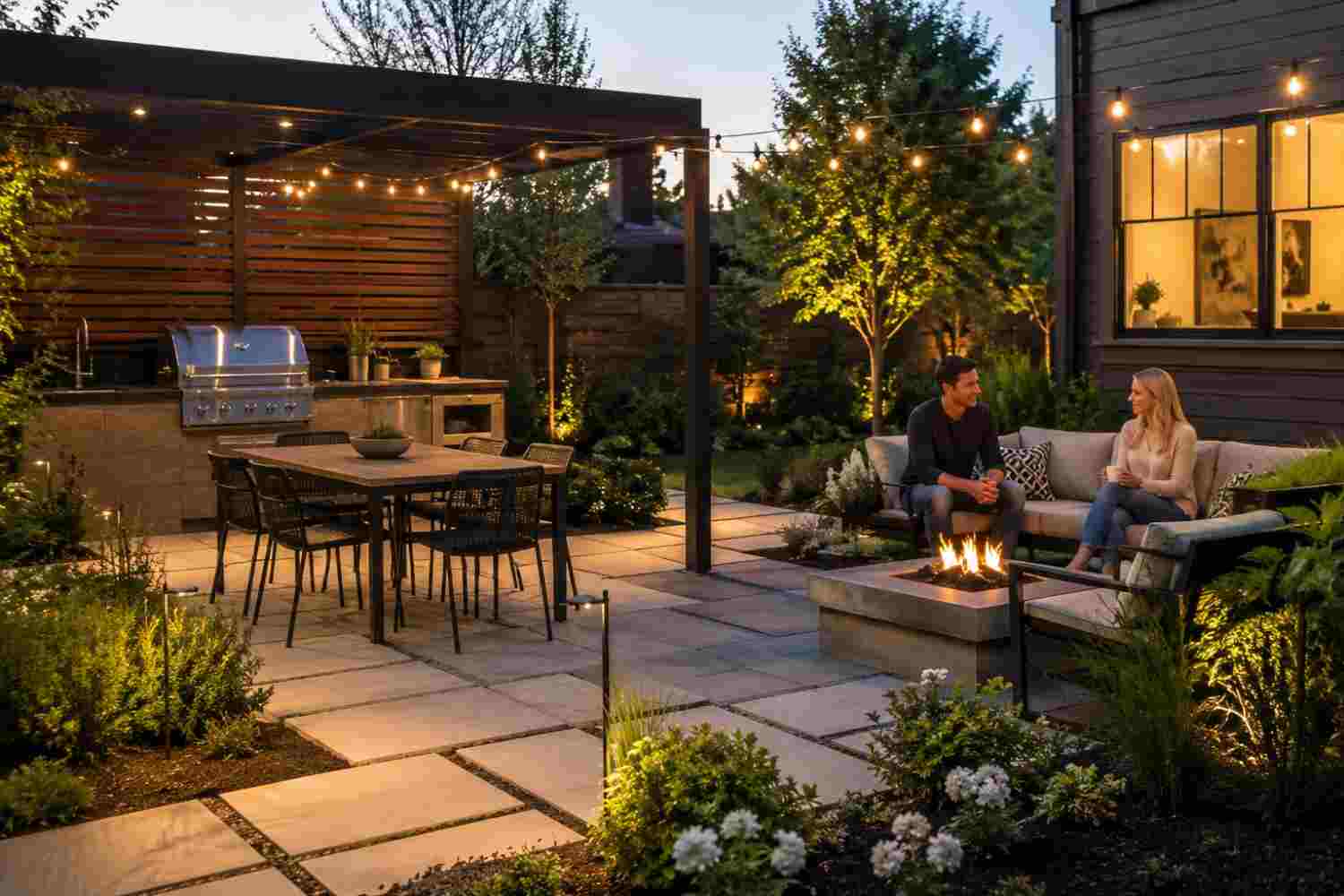
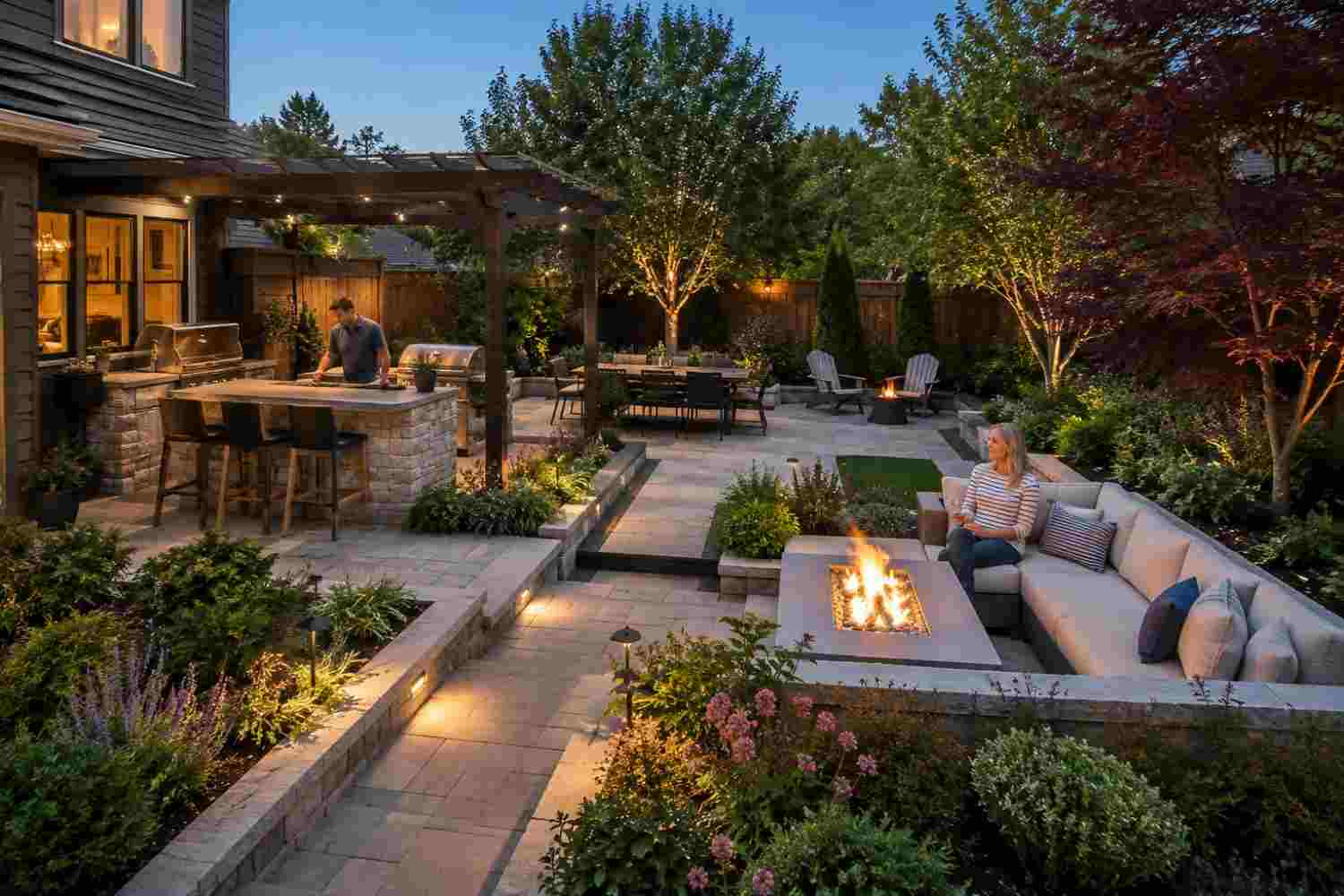
A useful landscape is built around movement and daily routines. That may mean a patio positioned to catch evening shade, a retaining wall that creates a level seating area, or low-voltage lighting that makes the garden safer after dark. These are not extras. They are the infrastructure of a more functional property.
The mistake many property owners make is adding features one at a time without a larger system in mind. A nice pergola means little if the seating zone is too small. A fire pit does not solve anything if guests still have nowhere to sit comfortably. Good design connects the features so each one supports the next.
Structural Features That Turn Difficult Ground into Usable Space
On many Utah properties, the biggest barrier to functionality is not style. It is grade. Sloped or broken terrain can make a yard feel segmented, unsafe, or hard to furnish. The right structural work changes that immediately by creating flat, stable areas that can actually be used.
Engineered retaining walls are one of the most effective tools for this job. They can transform otherwise awkward terrain into level terraces, garden platforms, or gathering areas. That gives the property a stronger layout and often increases the amount of usable outdoor space without expanding the footprint.
Durable paver patios also play a central role. Unlike loose surfaces or unstructured lawn zones, a well-built patio creates a clean foundation for dining, seating, and traffic flow. When paired with drainage planning and materials selected for local thermal expansion, the surface is more likely to hold up to seasonal stress.
Cottonwood Landscapes approaches these features as construction assets, not surface decoration. That distinction matters, because the structural work underneath is what allows the finished space to remain functional through changing weather and repeated use.
Retaining Walls as Space Makers, Not Just Slope Fixers
A retaining wall should do more than hold soil. It should help define a better outdoor plan. In practical terms, that could mean carving out a level play area, framing a patio, or creating planting beds that are easier to maintain. On a hillside lot, that kind of intervention can change how the entire property works.
The best walls are engineered with the site in mind. They must account for drainage, soil pressure, and the freeze-thaw cycle. If those variables are ignored, the wall becomes a liability rather than a solution. When handled correctly, though, a retaining wall becomes one of the most valuable functional upgrades a yard can receive.
Outdoor Living Structures Extend How Long the Space Gets Used
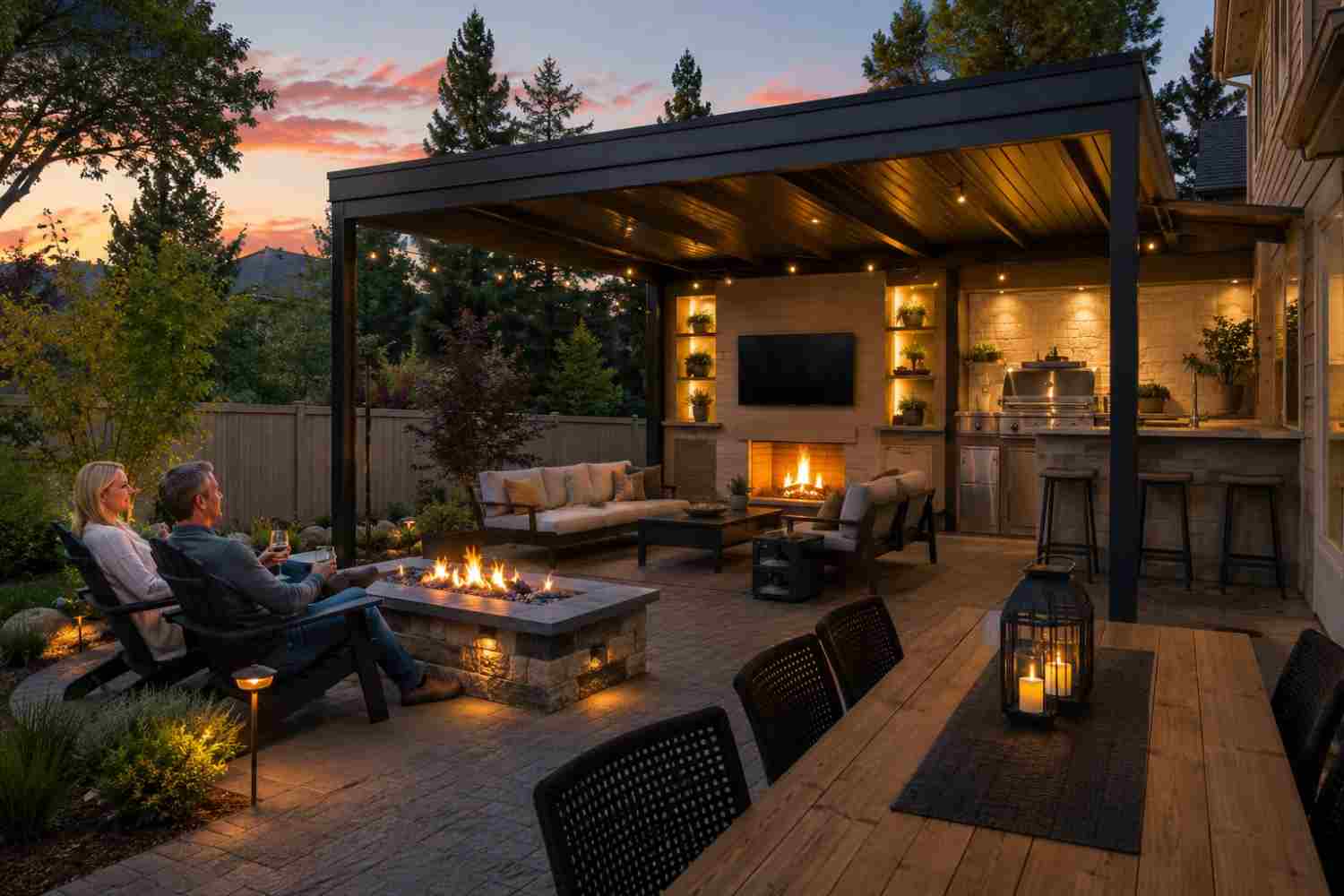
If the structural elements create the footprint, the living structures determine how often that footprint gets used. This is where outdoor kitchens, pergolas, patio covers, decks, and pool houses become strategic rather than luxurious. They define comfort, shelter, and convenience in ways that make the outdoor area genuinely livable.
A covered dining area changes the way people host. An outdoor kitchen reduces constant trips back inside. A deck can bridge elevation changes and connect entries, patios, and seating zones. A pool house can support storage, changing, and cleanup so the water feature becomes a whole experience instead of a single-use amenity.
These features are especially effective when they are designed together. Cottonwood Landscapes often builds complete environments, which allows the structure, circulation, and material choices to reinforce one another instead of competing for space.
Shade, Shelter, and Thermal Comfort Matter More Than Most People Think
In many outdoor spaces, people leave because they are uncomfortable, not because the design is unattractive. Shade structures and patio covers directly address that problem. They reduce sun exposure, help manage temperature, and create more predictable places to sit, eat, and gather.
Louvered structures are particularly useful when flexibility matters. They allow homeowners to fine-tune light and overhead cover rather than choosing between full exposure and total enclosure. That kind of control extends the usability of the space and helps the yard adapt to changing conditions throughout the day.
Lighting, Fire, and Water Add Usability After Sunset
A landscape does not stop being useful at sundown unless the design allows it to. Lighting is one of the clearest examples of a feature that improves both function and safety. Low-voltage LED systems make paths easier to navigate, steps more visible, and social spaces more inviting after dark.
Functional lighting is not just about brightness. It is about placement. The best systems guide movement, define edges, and reduce dark pockets without making the space feel overlit. That subtlety helps the yard feel polished while also reducing the friction that keeps people from using it in the evening.
Fire and water features add another layer of use. Fire pits and natural gas fireplaces extend the season by giving people a reason to stay outside when temperatures drop. Water features can soften hardscaping and improve the sensory quality of a patio or entry sequence. When used well, these elements are not decorative add-ons. They shape behavior.
Here are the most useful nighttime and shoulder-season features to consider:
- Low-voltage pathway lighting for safe movement
- Step and wall lighting for elevation changes
- Fire pits or fireplaces for cooler evenings
- Covered seating areas for weather protection
- Water features for visual focus and ambiance
Together, these features create a landscape that works in more hours of the day and more months of the year. That is a meaningful return in any climate, but especially in Utah, where seasonal swings can shorten outdoor living windows.
Planting Choices Should Support the Space, Not Compete with It
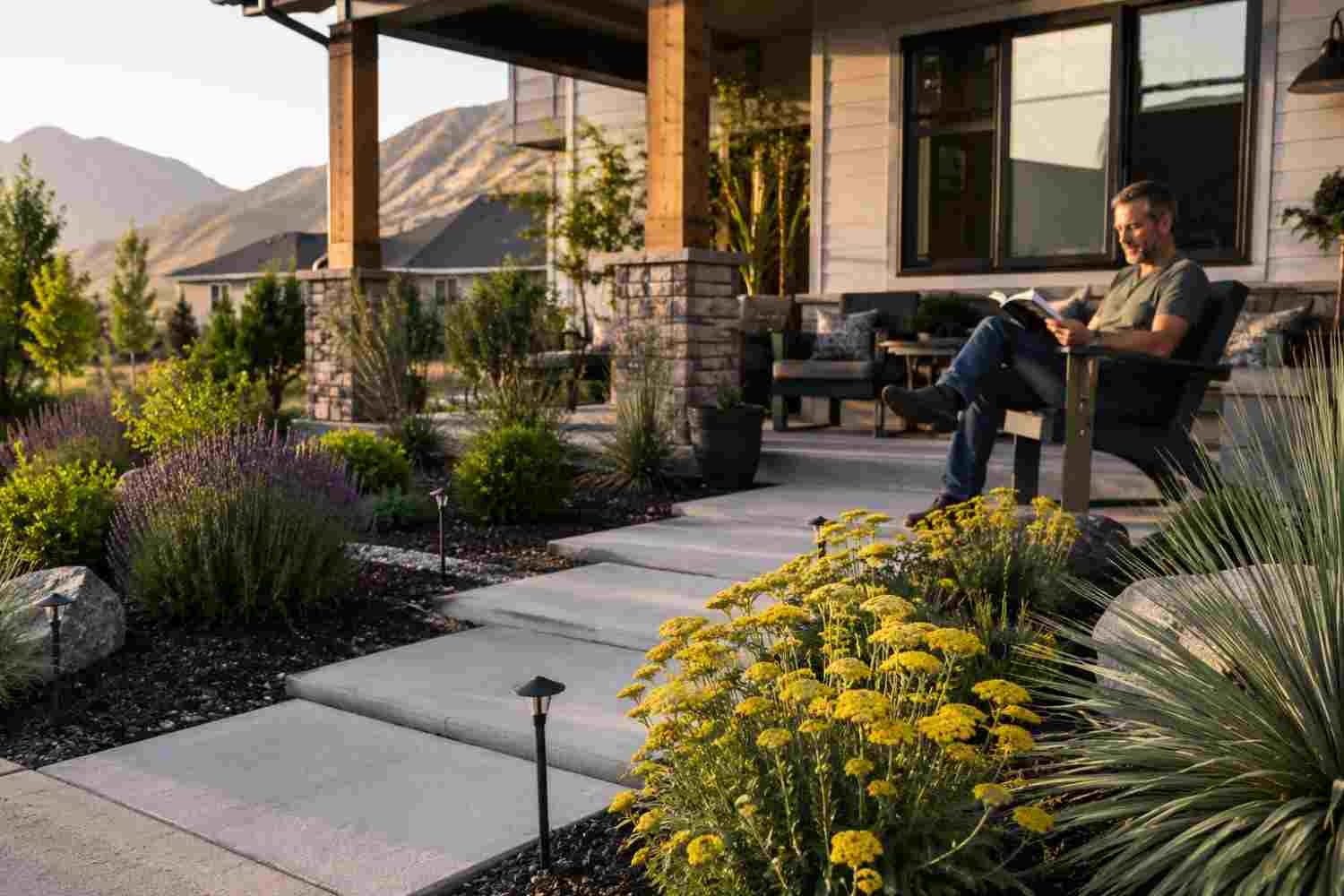
Softscaping still matters, but it should be chosen to strengthen the function of the property rather than overwhelm it. In practical terms, that means selecting plants that fit the site conditions, support visibility, and do not create avoidable maintenance problems. Incorporating fresh and airy design ideas can also help keep planting areas feeling open and balanced without sacrificing visual interest.
Xeriscaping and drought-tolerant planting are often smart choices in Utah because they align with local water realities and climate demands. That does not mean a yard has to look sparse or purely utilitarian. It means the planting plan should be intentional, balanced, and realistic about the environment.
The best planting designs support the architecture of the landscape. They frame views, buffer hard edges, soften structural elements, and help direct movement. They also need to coexist with drainage, wall systems, and gathering spaces. Cottonwood Landscapes integrates those layers so the softscape feels like part of the plan, not an afterthought.
Functional Planting Is About Restraint as Much as Variety
A common design error is using too many plant types in spaces that need clarity. When the goal is function, restraint often produces a better result. Fewer, better-placed plant groups can improve sightlines, reduce maintenance, and keep paths open.
That approach is especially valuable near patios, entries, and play areas. You want greenery that enhances comfort and beauty without blocking movement or creating constant cleanup. In a functional landscape, the planting palette should serve the way people use the property.
What Strong Utah Landscaping Teams Get Right from the Start
The difference between a decent yard and a truly useful one usually comes down to process. Strong operators do not wait until the end to think about drainage, grading, circulation, or code requirements. They design those issues into the project from the beginning.
That is where Cottonwood Landscapes stands out. Their consult, design, refine, build, maintain workflow gives each project structure before construction starts and accountability after it ends. For homeowners, that means fewer surprises and better alignment between the visual concept and the finished result.
The right team will also be honest about how features interact. A pergola is more valuable when it protects a dining zone. A retaining wall is more useful when it creates a level platform. Lighting matters more when it supports steps, entries, and seating. Functionality is not the result of one feature. It is the result of how the features work together.
For homeowners evaluating Utah landscaping options, that mindset is the real differentiator. It is the difference between a yard that looks complete and a property that actually performs.
The Long-Term Value of Designing for Use First
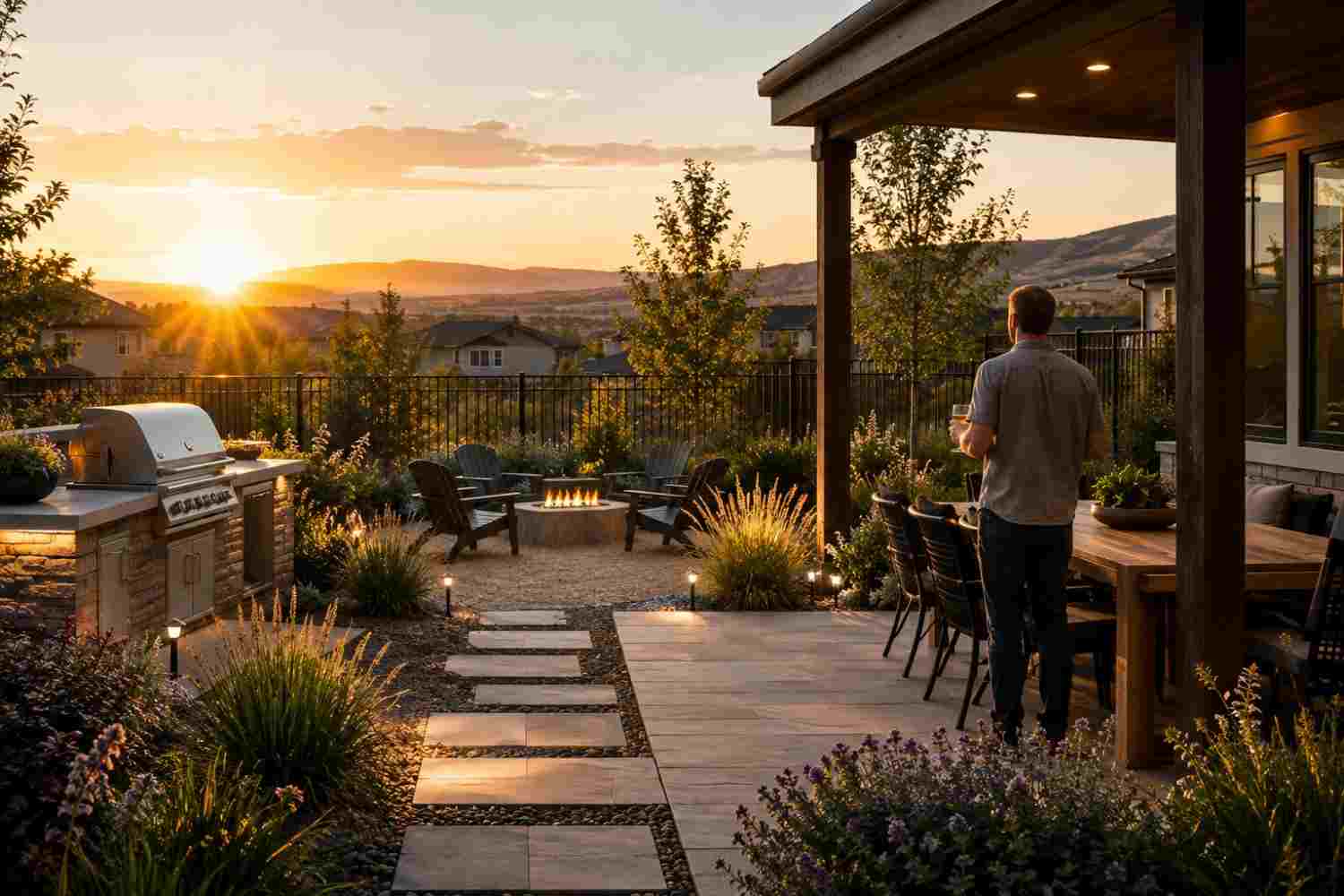
The best landscapes age well because they were designed around human behavior, not just visual trends. They invite people outside more often, make the property easier to navigate, and create spaces that remain relevant as routines change. That is the long-term value of functional design.
A thoughtful landscape can also reduce frustration. Fewer dead zones, better lighting, stronger circulation, and more comfortable gathering areas mean the space gets used instead of avoided. Over time, that changes how the home feels and how the property contributes to everyday life.
If your goal is a landscape that works as hard as it looks, start with the features that improve usability first. Cottonwood Landscapes builds with that priority in mind, combining structural craftsmanship, regional knowledge, and refined outdoor living design.